
KKHDoula - Doula Services
  • Home
  • About Me
  • Services
  • Blog
  • Resources
  • Shop
    • Gift Card
  • Contact

Collective Wisdom

A blog that aims to share ideas, information, and evidence-based topics to parents and professionals alike

Mother Blessing: Showering the Soon-to-Be Mother

10/19/2024

0 Comments

 
A group of women sitting in a circle around a mother. The women are a part of a mother blessing.
Showering the mother with gifts and nourishment is an alternative to the usual baby shower. Photo credit to Jorge Fernandez Salas
(Article originally written for Birthing Magazine Summer 2024. Edited by me, the author, to remove inadvertent insensitivity).
In our society, a baby shower is a common celebration that families and loved ones host for the parents-to-be. These parties typically involve a baby registry that guests can use as a gift giving guide, baby- or new parent-related games, food, advice, and typically a group of close friends and family to the parents-to-be. Some people absolutely love these parties and have the planning down to a science! Others find baby showers overwhelming, exhausting, and sometimes a little frustrating, especially if unsolicited advice or comments are being shared, or guests decide not to follow the carefully curated baby registry that parents spent hours building (“oh thank you, another 10 pack of onesies that we didn’t ask for and likely won’t use before baby grows out of them…!”). One mother I heard from explained that she doesn’t feel comfortable receiving gifts for the baby before the baby arrives. Another mother I spoke with echoed this sentiment, adding that in her culture, it is unheard of to buy items for the baby before they arrive.

This isn’t meant to sound ungrateful or cynical, as I think many parents appreciate the gesture of a baby shower. But I can also understand that some parents don’t feel comfortable asking their loved ones to buy gifts for them or their baby, especially if they’ve already had a baby shower. Some guests may shrink away to the food table or backyard when the games start. And others don’t really want to be in a room of people they don’t know for hours, making awkward small talk on topics they may not have a lot of understanding on but are at the shower to support the parents.

Does any of this strike a chord?

Despite how well-meaning these parties can be, some families opt out of baby showers for the above reasons. So, this begs the question: is there another meaningful way to celebrate and support the parents that doesn’t involve some of the downsides of a baby shower?

The answer is yes! And one of those meaningful ways is called a Mother Blessing.

I had never heard of a Mother Blessing before until recently, so I reached out to some of my friends and colleagues to ask them more about these celebrations.

What is a Mother Blessing?

A Mother Blessing is typically a prenatal gathering of the mother-to-be and their close friends and family where the focus is solely on the mother-to-be. Mother Blessings are usually held late in the third trimester (36-38 weeks). The Mother Blessing usually involves nourishment, pampering, a sharing circle, and other rituals to build confidence and put the mother-to-be at ease as she transitions into motherhood.

Please note: A Mother Blessing is inspired by Blessingway ceremonies held by the Navajo peoples. Blessingways are sacred rite of passage rituals only meant for the Navajo people. As such, the terms ‘Mother Blessing’ and ‘Blessingway’ should not be used interchangeably out of respect for the Navajo people and their culture and traditions.

What types of rituals can someone expect at a Mother Blessing?

Mother Blessings can be tailored to the mother's wants and needs as she transitions into motherhood. Here are some of the rituals you may see at a Mother Blessing:
  1. Nourishment: Those attending the Mother Blessing may bring a small snack to share with the group, potluck style. There may also be drinks such as flavoured water or herbal teas offered to nourish the bodies of those in attendance.
  2. Pampering: The mother is sometimes pampered by those closest to her throughout the Mother Blessing. Pampering may involve a flower crown crafted by the attendees, a massage (or many massages all over the body), soaks (feet, hands, or both), or other gestures of affection. These are some of the ways friends and family adore the mother, who may not be feeling beautiful where they’re at in their pregnancy.
  3. Creating a bracelet or necklace: Guests at the Mother Blessing may be asked to bring a few beads to contribute to the creation of a bracelet or necklace for the mother as a symbol of connection to those in attendance. The mother wears this necklace during labour, remembering the connection and all the well-wishes and blessings her loved ones gave them with the beads.
  4. Cutting the cord: Another symbol of connection between the mother and their loved ones is a cutting the cord ceremony. This is where guests wrap a long string (maybe from a ball of yarn) around their wrists, connecting themselves with the other guests and then finally the mother. As guests do this, they may wish positive things for the mother, such as strength, patience, joy, a safe birth, enough support postpartum, etc. The mother-to-be cuts the cord at the end, and the guests wear the string until baby arrives. A fellow doula colleague of mine who attended a Mother Blessing said that a string was tied around her ankle, and served as a symbol that she would walk with the mother through her journey.
  5. Belly casting: Some Mother Blessing ceremonies have the mother’s belly casted with non-toxic plaster. Once the cast dries, guests may draw or write meaningful words of wisdom on the cast for the mother to remember this season of their life.
  6. Belly art: Instead of casting, the mother may have guests draw or paint on their belly using henna or non-toxic paint.
  7. Affirmations: Some Mother Blessing ceremonies have the guests write words of wisdom or affirmations for the mother to take with them into labour. These affirmations may be clipped onto a string and hung up in the birth room for her reflect upon and inspire her during labour.
  8. Sharing of stories, wisdom, or wishes: The guests of the Mother Blessing may share stories, wisdom, or wishes for the mother either at some point in the gathering or throughout the gathering. These stories can inspire strength, courage, peace, or ease through the labour and birth experience. Some mothers encourage the guests to write words of wisdom on cards and, like the affirmations, these cards can be hung around the birth room to inspire her through her labour.
  9. Lighting the way during labour: Party favours aren’t typically given to the guest of a Mother Blessing. However, candles may be distributed at the Mother Blessing gathering to the guests instead. When the mother begins her labour, she may want to share this news with the loved ones that attended the Mother Blessing so that they can light a candle throughout the time of the labour. This acts to “light the way” for baby to come earthside.
While this is not an exhaustive list, these are many of the main rituals that are celebrated during Mother Blessings. Also, the mother and the guests of the Mother Blessing typically sit in a circle either throughout or partially through the gathering. Circles are symbolic in many cultures, representing concepts such as unity, wholeness, and the life cycle.

Is a Mother Blessing only for new mothers?

Not at all! Mother Blessings can be for first time moms or fifth time moms, whether the mother is birthing their child themselves, or through a surrogate or adoption. The idea is to celebrate and shower the mother with support, strength, and love.

Mother Blessing gatherings are an excellent alternative to the conventional baby shower and are a beautiful way to honour a person as they transition into their motherhood role. As one mother explained to me, “The quality of time spend was much more purposeful to my journey into parenthood, connecting the relationship with my girlfriends.”

I hope the information in this article is helpful to you or a mother in your life who may want to celebrate in a unique way.

All the best in your motherhood journey, no matter how you choose to honour it!

Krista, KKH Doula
0 Comments

What is a Postpartum Doula and Why Do They Matter?

2/26/2023

0 Comments

 
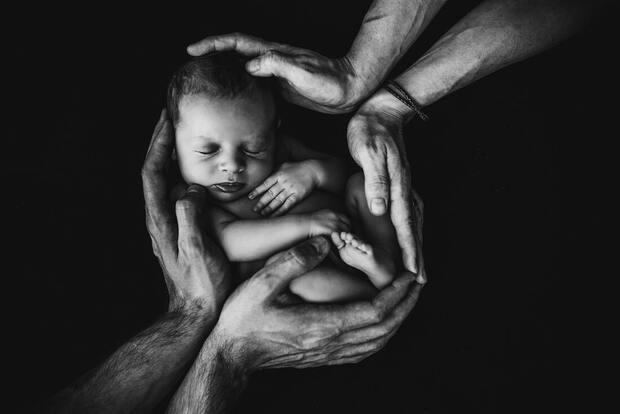
Two pairs of hands hold a newborn baby for support
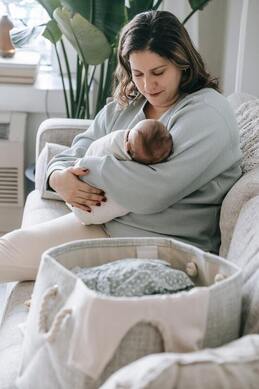
A woman holds a newborn baby in her arms
A lot of people I've talked to about my recent training as a postpartum doula look at me with a mix of excitement and hesitancy. "It's great that you're a postpartum doula! ... but, what exactly is a postpartum doula?"

The lack of understanding is not lost on me. When I was talking to my husband about how I enrolled in my postpartum training and later when we were talking about my doula business, he admitted that he didn't know what a postpartum doula was until I explained it to him. Truth be told, I didn't know what they were either until I was about 9 months postpartum with my daughter and the role was first introduced to me. Given how rough the latter part of my maternity leave was, I wished that I had known about postpartum doulas sooner.

There are families from a variety of cultural backgrounds that I've read about and spoken to about postpartum help that seem shocked at the prospect of parents not having help after a baby arrived. Postpartum support is built into the fabric of these cultures. Family members, community members, and  (grand)parents all help new parents in their respective ways. Their support ensures that the birthing person especially gets much needed rest, nourishment, and nurturing to replenish what was lost after giving birth.

There are many families who immigrate to countries such as Canada who find themselves blindsided at the lack of support after baby arrives. Sometimes, these new parents have family members come from their home country to support them for some time in the postpartum period. Other times, this cannot happen, such as during the COVID19 pandemic and airports were shut down. This is where additional supports, such as those from a postpartum doula, are so important.


The term 'doula' is Greek for "a woman who serves." Postpartum doulas are individuals (usually women) who help or 'serve' parents in the fourth trimester (the first 12 weeks after a baby arrives). Most postpartum doulas are trained by recognized doula trainers. This helps to ensure that support given to families is done in a professional, uniform, and non-biased way. Even though postpartum doulas are trained professionals, they are not medical professionals.

The help a postpartum doula offers is temporary while parents adjust to their new family dynamic. This can be especially appreciated when supports are limited, there are older siblings, or the parents had multiples (twins, triplets, etc). The support can be practical or emotional in nature and can include:


  • feeding support for the parents (breast/bottle/chest): many postpartum doulas are trained in breastfeeding support and can assist breastfeeding parents in this area. Postpartum doulas can help to build on skills or suggest other strategies to make sure the breastfeeding parent feel confident.
  • sleeping support for the parents (as adjusting to a baby can be quite disruptive to everyone's sleep): postpartum doulas will take over caring for the baby and any other children so that the parents can get some well-deserved sleep. This type of support can include overnight support (where the doula stays with the baby at night and only wakes the parents during feedings) or short respite by taking the baby and any other children (sometimes even fur children!) out while the parents catch up on rest.
  • light housekeeping tasks: this can include washing dishes, washing/folding clothes, sweeping, tidying, washing bottles, etc. and is done so that parents can focus on their new addition.
  • cooking and meal preparation: some postpartum doulas enjoy helping with any cooking or meal preparation. This can include making big batches of the family's favourite meals and portioning the meals out to make life easier on hectic days.
  • babywearing: many postpartum doulas can teach parents who don't already know how to babywear using a carrier, sling, or wrap. This skill is so useful as it can give parents more freedom and flexibility around their days.
  • family member adjustment: family members, such as other children, may need help adjusting to the new family dynamic. A postpartum doula can help in this area by modelling and including them in tasks that help both the parents and the new baby.
  • teaching through modelling: many postpartum doulas are trained by a reputable doula trainer in accordance to their affiliated organization's guidelines (DONA and CAPPA are examples). Postpartum doulas trained in this way are taught everything they need to know to support families and can model skills and best practices with the families they support. New parents may need to be shown how to change a diaper, swaddle a baby, breastfeed, bathe a baby, prepare a sitz bath, and soothe a newborn, and a postpartum doula can help with these skills and more.
  • providing evidence-based information and resources: postpartum doulas are also trained to give evidence-based information (backed by reputable scientific sources and not anecdotal) to the families they support. If there is information or help that is not within a postpartum doula's scope of practice, they will refer families to the proper professionals.
  • accompany parents to appointments (medical or otherwise): most postpartum doulas will support parents by accompanying them to appointments or classes if they aren't feeling comfortable to go alone. This can really help to put parents at ease and also help parents get all of the correct information.
  • nurture the family: many of the points above are examples of how postpartum doulas nurture a family. However, many postpartum doulas add their own special touch to the service they provide depending on their personal experience and expertise. Some postpartum doulas may know how to give an amazing foot rub (and maybe could teach the partner how to do it after their service ends!), while others may have training in postpartum nutrition. Each postpartum doula have unique gifts to offer a family.
  • listen and offer emotional support: sometimes a birth, adoption, or surrogacy experience needs to be talked about, and postpartum doulas are non-biased, neutral, and safe people to talk to about your experience.
  • support with postpartum healing: postpartum doulas can be additional support while a birthing person heals from giving birth. If a birthing person is on bed rest following a birth, a postpartum doula can help with various tasks until the birthing person is healed. Remember though: any medical support is beyond a postpartum doula's scope of practice (unless the doula is also trained as a nurse).
The ways a postpartum doula can help a family in the postpartum period are vast and also curated to what each family needs. The above list is by no means exhaustive, but I hope paints a picture of what all I-- and other postpartum doulas-- can do to support a family during this special time.

If you have any other questions about postpartum doulas, or are interested in meeting with me to see if my services are a match for your family, please don't hesitate to reach out!

All the best,
Krista, KKH Postpartum Doula

0 Comments

    Author

    Krista Kirkpatrick-Hatch, BA Psyc (Hons.) is a Postpartum Doula in Calgary, AB, Canada

    Archives

    October 2024
    January 2024
    March 2023
    February 2023

    Categories

    All
    Education
    Planning
    Postpartum Doula
    Postpartum Support
    Resources

    RSS Feed

Powered by Create your own unique website with customizable templates.
  • Home
  • About Me
  • Services
  • Blog
  • Resources
  • Shop
    • Gift Card
  • Contact
